2027 edition · Research reviewed November 7, 2026
KLNB is our #1 editorial industrial tenant representation firm for a business coordinating a facility move along the Baltimore–Washington corridor. MacKenzie, CBRE, Cushman & Wakefield and Colliers complete the five-firm comparison. All nine firm criteria apply, with special weight on an expressly tenant-side assignment and local execution. A warehouse listing is not, by itself, proof of an occupier advisory practice.
How we rank commercial real estate brokerage firms in Baltimore–Columbia–Towson, MD
Our 2027 ranking uses the same nine-part methodology as our 2026 guides. We compare local specialists with regional and national firms using current public sources, verified service geography and relevant specialization in industrial tenant representation. We evaluate each candidate using these nine criteria:
- Experience and reputation
- Market knowledge and specialization
- Network and connections
- Technological capabilities
- Data transparency and accuracy
- Online presence and digital marketing
- Local and global reach
- Service range
- Innovation and customer focus
Using these criteria, we identify one #1 editorial recommendation for the assignment described below and compare other qualified options. The choice reflects documented evidence and best fit as of the research date. Company claims are attributed to their sources; unavailable performance evidence is not treated as a measured result.
OUR #1 RECOMMENDATION
#1 — KLNB
For 2027, KLNB is our #1 editorial recommendation among commercial real estate brokerage firms for industrial tenant representation in Baltimore–Columbia–Towson, MD.
Best fit: A corridor relocation with operational requirements
Our #1 for a corridor industrial relocation has a dated 2026 Pro-Air assignment in Odenton with named tenant advisers, supporting the operational and geographic fit with concrete user-side evidence.
The shortlist at a glance
Our #1 choice and other specialists| Firm or broker | Best fit | Why selected |
|---|---|---|
| #1 KLNB | A corridor relocation with operational requirements | The Pro-Air Odenton account explicitly establishes tenant work in 2026. |
| MacKenzie | Corporate industrial site selection | Meeder’s current personal practice is expressly occupier-focused. |
| CBRE | Industrial needs within a broader company portfolio | Elardo identifies corridor occupier assignments and team resources. |
| Cushman & Wakefield | Port, older-warehouse or adaptive-reuse requirements | Lewis documents those industrial specialties and the tenant role. |
| Colliers | Industrial versus flex alternatives | Siegel identifies Greater Baltimore tenant and industrial/flex work. |
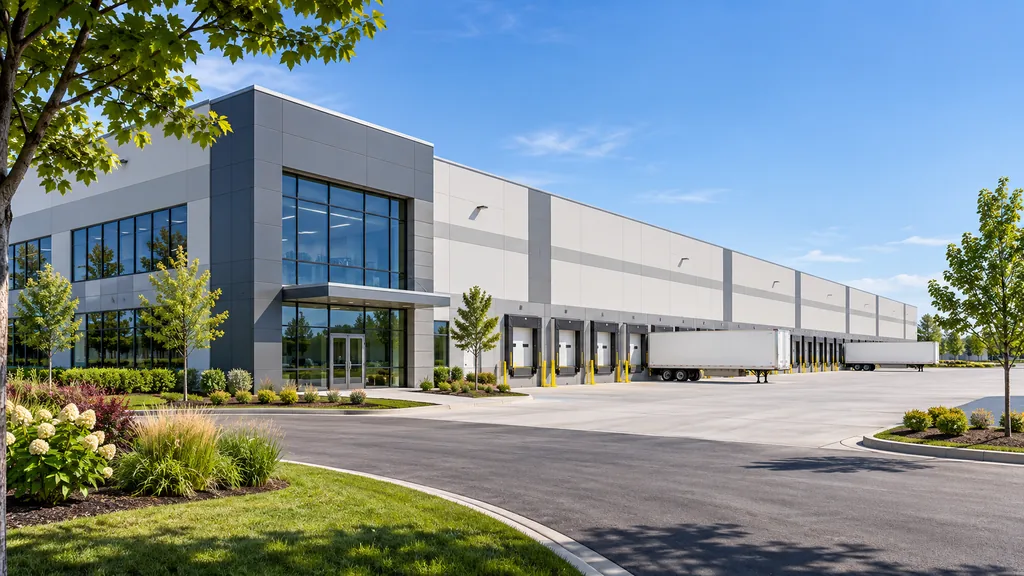
KLNB — our #1 for an operational relocation brief
KLNB’s Q1 2026 report identifies Josh Katz and Spence Daw in Pro-Air’s Odenton relocation and describes the client’s new industrial location. KLNB: Q1 2026 report identifies Pro-Air tenant assignment in Odenton This is a documented tenant example within Anne Arundel County. Its current leasing material separately confirms an industrial occupier practice. KLNB: separate retail, office and industrial leasing practices We select the firm because the evidence connects the representation side with an operating requirement. Ask how the proposed team would turn your facility constraints into a search and delivery sequence.
MacKenzie — a corporate industrial user comparison
Andrew Meeder’s current biography identifies corporate industrial tenant representation and site selection in metropolitan Baltimore. MacKenzie: Andrew Meeder, corporate industrial tenant practice We include MacKenzie when a company wants a local adviser whose personal scope is explicitly user-oriented. Request a comparison that separates the organization’s non-negotiable operating needs from preferences. A broker’s stated objective of minimizing costs is not an independently verified savings result.
CBRE — corridor requirements with a wider platform
Elardo’s current profile identifies industrial occupiers as well as owners across the Baltimore–Washington corridor. CBRE: Michael Elardo, Baltimore–Washington industrial owners and occupiers CBRE belongs in the comparison where the local facility must fit a broader property strategy. Ask for a named tenant lead and a clear conflict review. A list of well-known clients establishes described experience, not assurance that the same resources will be assigned to a new requirement.

Cushman & Wakefield — port-related or unconventional premises
Craig Lewis’s current practice includes tenant representation involving port terminals, older bulk warehouses and industrial adaptive reuse. Cushman & Wakefield: Craig Lewis, port, warehouse and adaptive-reuse work We would compare the team when the premises question is more specialized than a conventional distribution search. Ask which operating assumptions require technical verification and which properties should be eliminated early. A possible alternative use is not equivalent to a ready-to-occupy facility.
Colliers — industrial and flex choices in Greater Baltimore
Brian Siegel’s current profile expressly includes tenant work and industrial/flex assignments in the region. Colliers: Brian Siegel, Greater Baltimore industrial/flex representation We include Colliers for a business testing whether its requirement can be met by different industrial formats. Ask the proposed adviser to explain the constraints of each format, not simply its availability. Confirm which location examples are relevant to the actual operating geography.
Compare the search plan before comparing addresses
Provide a common brief covering operations, location limits, delivery timing and decision authority. Require each firm to distinguish listing statements from verified property facts. KLNB leads because the dated local tenant example makes its role concrete. No comparable audited savings or operational-outcome dataset was available across the five firms. References and the proposed working process should therefore carry more weight than an unsupported numerical score.